
Sensory play builds thinking, social, and motor skills. Teachers can use simple hands-on activities to engage different senses. Both structured tasks and free play help children explore and learn in their own way.
Create Sensory-Rich Environments
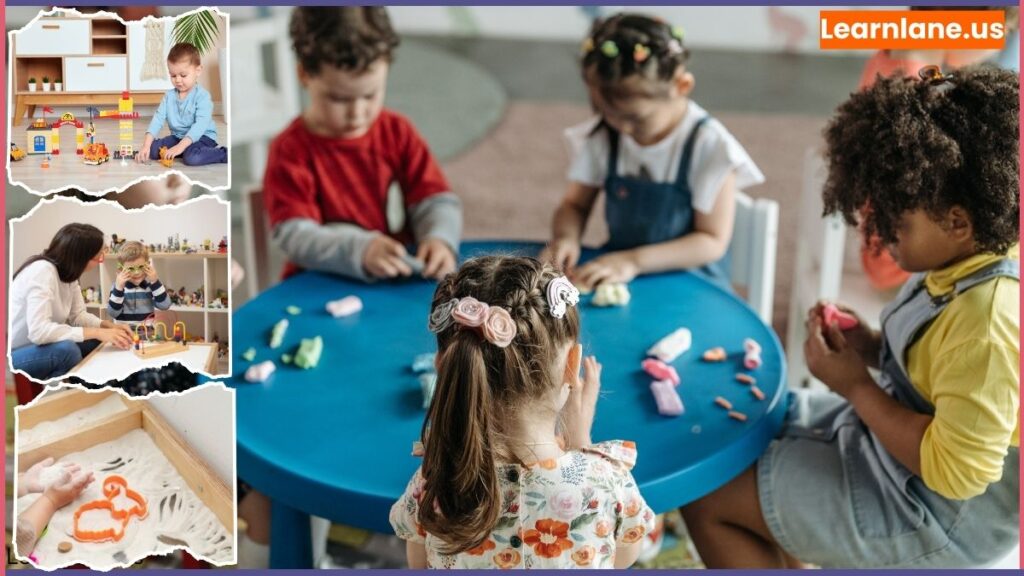
A well-designed sensory environment includes spaces that invite exploration, comfort, and engagement. Designated sensory areas within classrooms or play spaces allow children to engage with materials that stimulate touch, sight, sound, taste, and movement. These areas may include quiet corners with soft textures and dim lighting for relaxation, messy play stations with materials like water or kinetic sand, and active zones featuring climbing structures for vestibular input.
Providing accessible sensory tools, such as textured objects, musical instruments, light tables, or fidget items, supports a range of sensory needs and preferences. Thoughtful material selection, natural elements like wood and leaves, scented playdough, or visually engaging patterns encourages multi-sensory learning.
Questions to Encourage Exploration
- What does this object feel like?
- How does the light change when we add different colors?
- What happens when you mix these textures together?
- Can you describe the sound this makes?
Age-Appropriate Activities
Sensory play should align with a child’s developmental stage. Infants benefit from simple tactile exploration, such as soft fabric books or water play, while toddlers engage in more interactive experiences like finger painting and texture sorting. Preschoolers can explore sensory storytelling, hands-on science experiments, or creative art projects that incorporate multiple senses.
Safety remains a priority when designing sensory activities. Small objects should be avoided for younger children, and non-toxic, hypoallergenic materials should be used whenever possible. Supervision is essential, particularly in activities involving water or high-energy movement.
Sensory play should match a child’s developmental stage to ensure engagement and learning.
- Engage infants (0-12 months) with soft fabric books, rattles, and high-contrast black-and-white cards.
- Provide toddlers (1-3 years) with water play, finger painting, and shape-sorting games.
- Encourage preschoolers (3-5 years) with nature walks, musical instruments, and sensory storytelling.
Questions to Guide Play
- What do you think will happen if we mix these colors?
- How does this texture feel compared to the other one?
- What do you smell? Can you guess what it is?
- Can you build something using these materials?
DIY Sensory Materials and Setups
Educators can create cost-effective sensory materials using everyday items.
- Make sensory bins with rice, dried beans, sand, or water. Add scoops, cups, and toys.
- Create tactile boards using cotton, burlap, foil, and sandpaper for texture exploration.
- Mix scented playdough with essential oils like lavender or citrus for olfactory engagement.
- Set up light and shadow play with light tables, flashlights, or projectors and translucent objects.
How to Integrate Sensory Play into Curriculum?
Sensory experiences can be seamlessly woven into learning objectives, making academic concepts more tangible and engaging. Math lessons may incorporate counting textured objects, while science concepts can be explored through hands-on experiments with water or light. Storytelling can become more immersive by adding scented markers or textured props, reinforcing language and literacy development.
Encouraging exploration without rigid outcomes fosters creativity. Open-ended play with natural materials, loose parts, or sensory bins allows children to make discoveries at their own pace. STEM-based sensory projects—like testing buoyancy in water or experimenting with different materials for building structures—can make abstract concepts more concrete.
Questions to Connect Learning
- How many rough objects can you find in the sensory bin?
- What happens when you pour water on the sand?
- Can you create a pattern using these materials?
- How does this experiment remind you of something in nature?