
Looking for free circle tracing worksheets for preschoolers that are easy to use and support early childhood development? These tracing activities are perfect for children ages 3–5 who are just beginning to explore shapes, develop fine motor control, and learn how to hold a pencil or crayon.
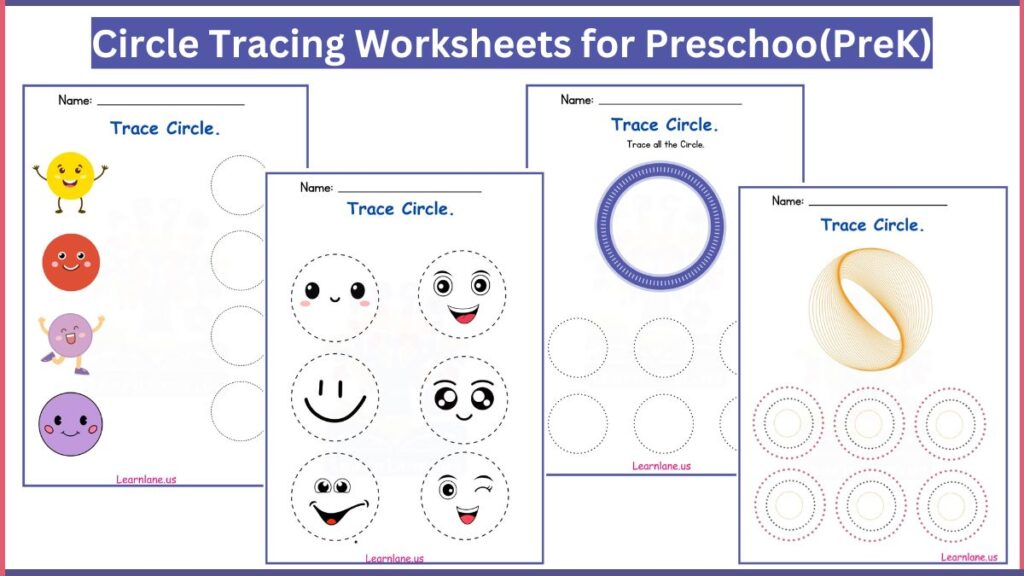
Circle tracing is a key foundational activity that prepares preschoolers for writing, drawing, and early math skills like counting and pattern recognition. Whether you’re a parent, teacher, or homeschooler, these worksheets are easy to recreate, printable in plain text, and effective for preschool shape practice at home or in the classroom. Whether at home or in the classroom, these sheets support pencil control, fine motor development, and early shape recognition.
Circle Tracing Worksheets for Preschoolers
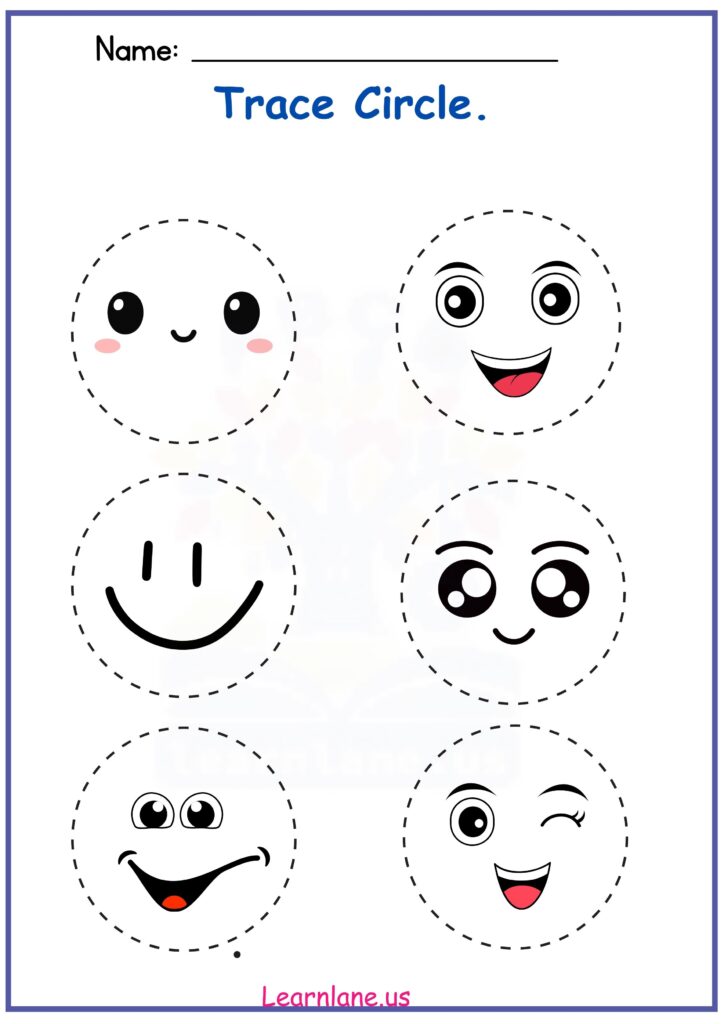
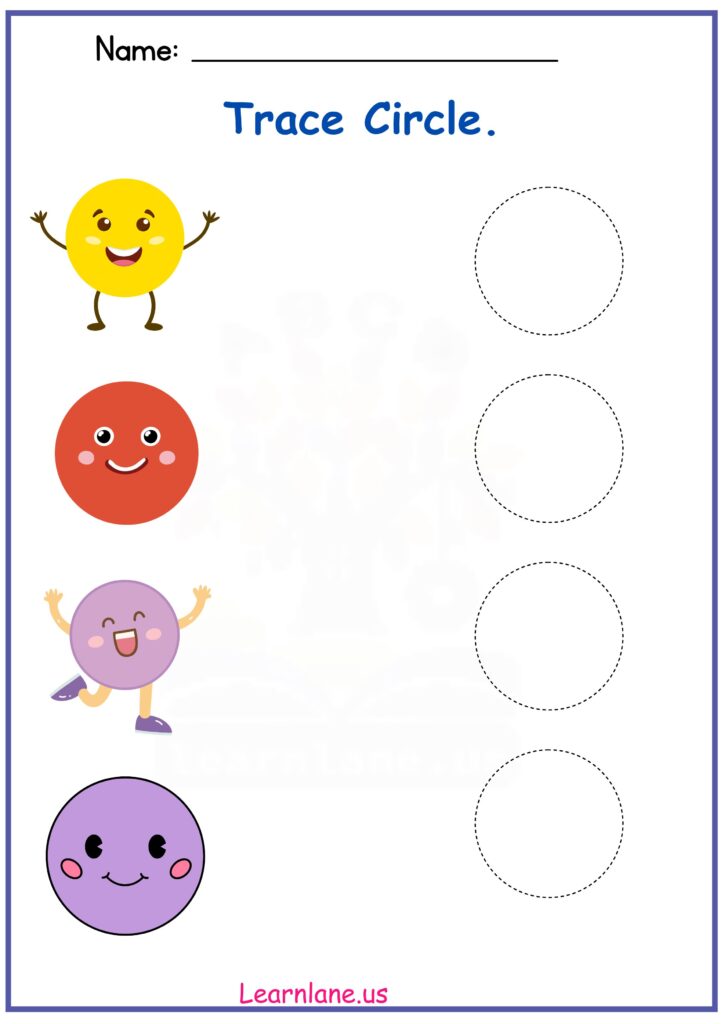
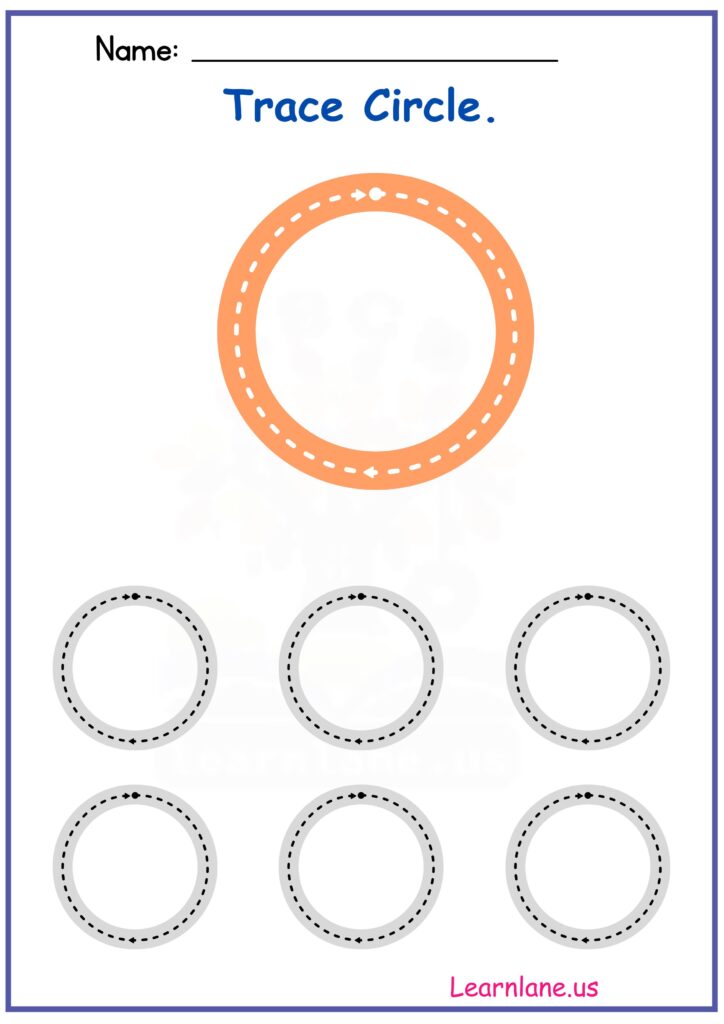
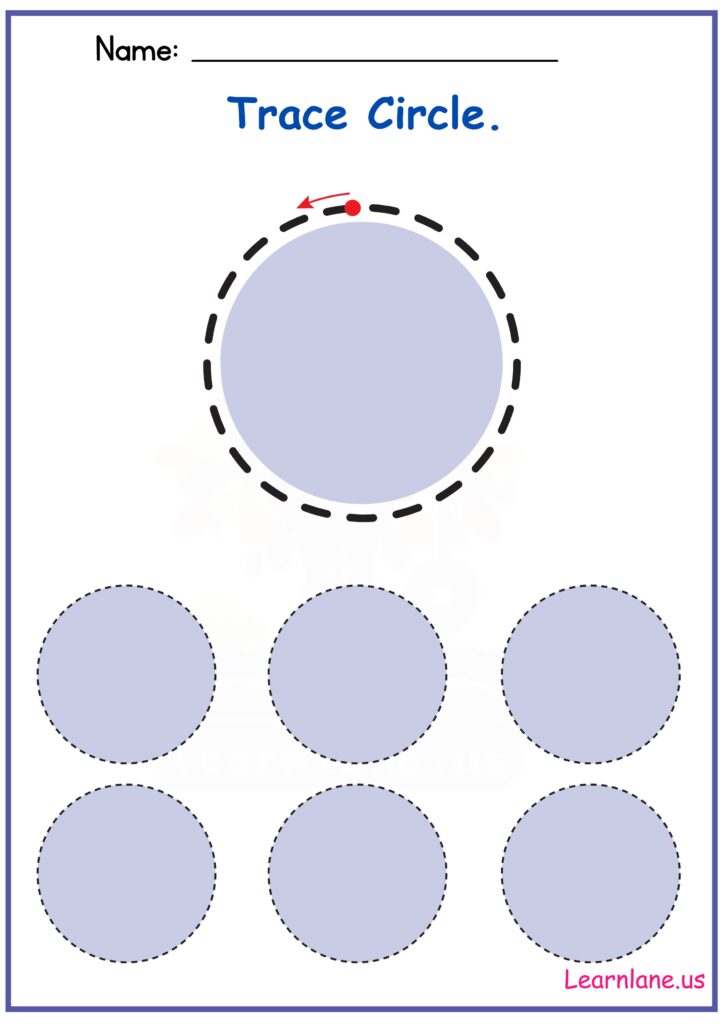
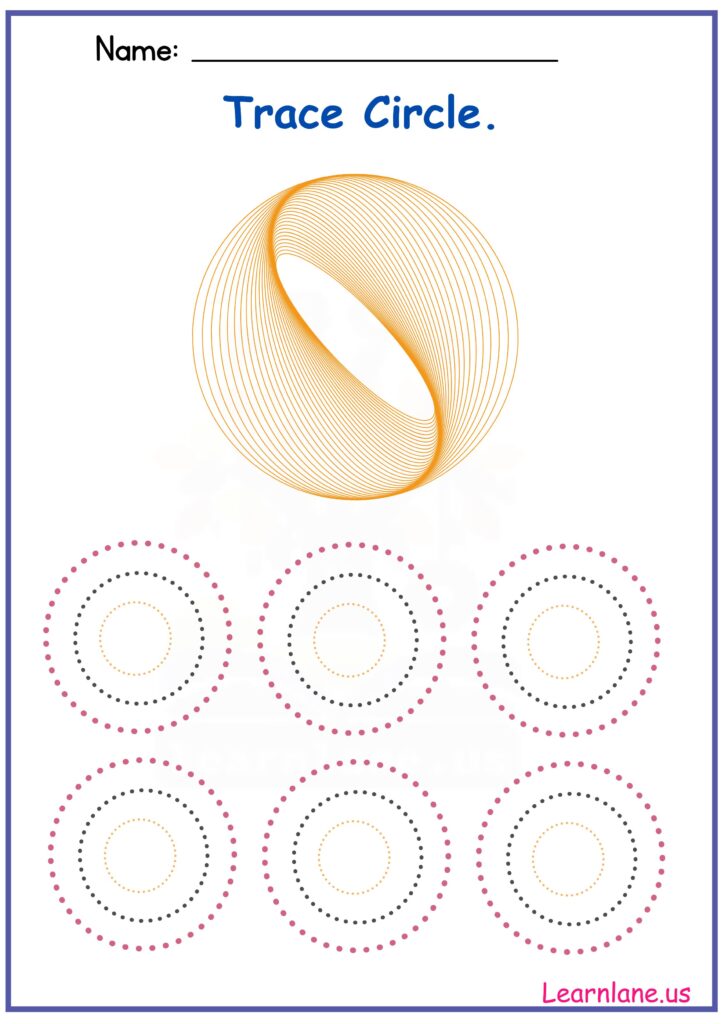
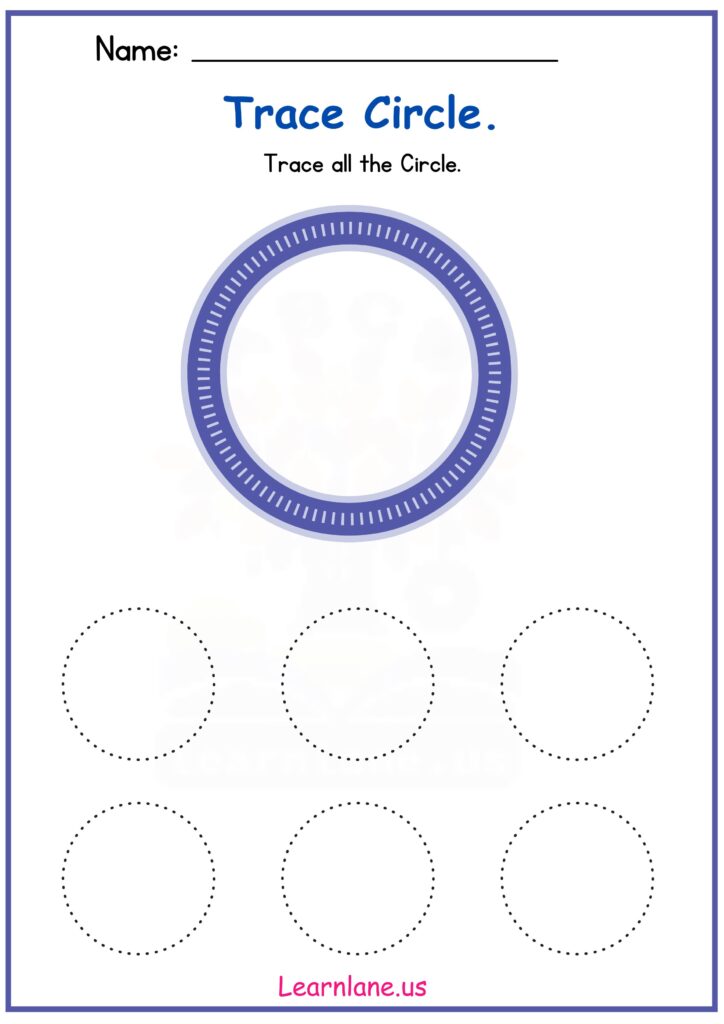
Circle Tracing for Fine Motor Skills and Early Learning
Tracing circles builds control, strength, and hand-eye coordination. It’s one of the most effective ways to develop fine motor skills before formal writing. Circles are also among the first shapes young children learn to identify in everyday objects—clocks, wheels, buttons. These preschool shape worksheets printable help reinforce that recognition.
Why Circle Tracing Matters in Early Learning
Circle tracing helps children strengthen fine motor skills, improve hand-eye coordination, and develop pencil grip control—all of which are essential for writing readiness. Repeatedly tracing a smooth, curved shape like a circle helps train young hands to move with control and precision, preparing kids for writing letters, numbers, and other shapes.
Preschoolers also learn shape recognition through repeated exposure. Circles are one of the first shapes children identify in the world around them—think wheels, balls, and clocks. By practicing with simple circle tracing worksheets, children begin to connect visual patterns with movement, which boosts early geometry and spatial understanding.
Each worksheet has a clean, focused design. Some use 5–6 large dotted circles (about 3 inches wide), spaced evenly. Others use smaller or more frequent circles for practice as the child progresses. One layout features 4 circles in a square pattern. Another includes 2 rows of 3 circles, perfect for building tracing rhythm and consistency. All sheets are print-ready and distraction-free.
How to Teach Tracing to Preschoolers?
Begin with finger tracing. Then demonstrate using a crayon or marker. Use simple cues like “start at the top” or “go around slowly.” Thick crayons are easier for younger children to hold. Encourage them to trace each circle more than once using different colors. Keep sessions short and celebrate effort—not perfection.
Tracing Circles for 3-Year-Olds and Up
These worksheets are suitable for 3-year-olds and preschoolers. For younger learners, use pages with fewer and larger circles. Older children can try pages with tighter spacing or smaller circles. You can also:
- Number the circles to include counting
- Assign colors for simple following-directions tasks
- Add a free-draw section for copying the shape after tracing
- Try sensory play by placing sheets under trays of rice or flour for finger tracing
Easy to Print or Recreate by Hand
While you can print each worksheet directly, you can also draw them yourself.
Example:
- Sketch 6 dotted-line circles (2 inches wide), arranged in two rows. Add a prompt: “Trace and count each circle.”
- These free preschool tracing worksheets are easy to customize, reuse, and adapt to different learning styles.