
Triangles are one of the first geometric shapes preschoolers can learn to identify, and tracing them builds more than just art skills. These free triangle tracing worksheets for preschoolers strengthen fine motor control, introduce the idea of sides and corners, and help children understand how shapes fit into everyday objects. With clear dotted outlines, a mix of large and small triangles, and open spaces for coloring or decorating, these printables turn early geometry lessons into engaging hands-on activities. They work equally well for at-home learning, preschool classrooms, and kindergarten readiness programs.
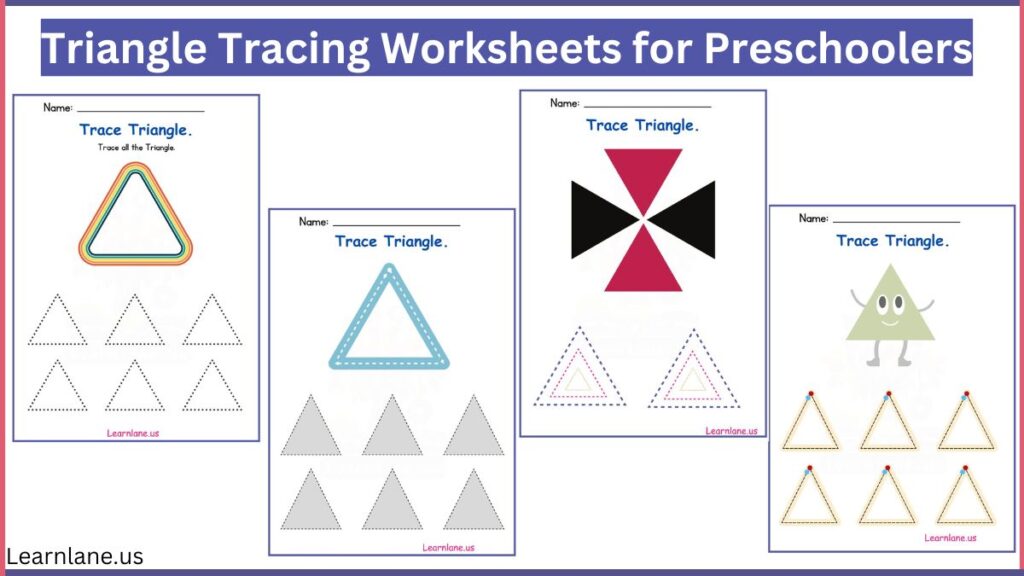
Download Triangle Tracing Worksheets for Preschoolers
Click to download the free triangle tracing worksheets. Print them for quick table activities, shape recognition lessons, or craft projects. Use them to guide early geometry practice, build pencil control, and spark creativity as children turn triangles into kites, mountains, or party hats.
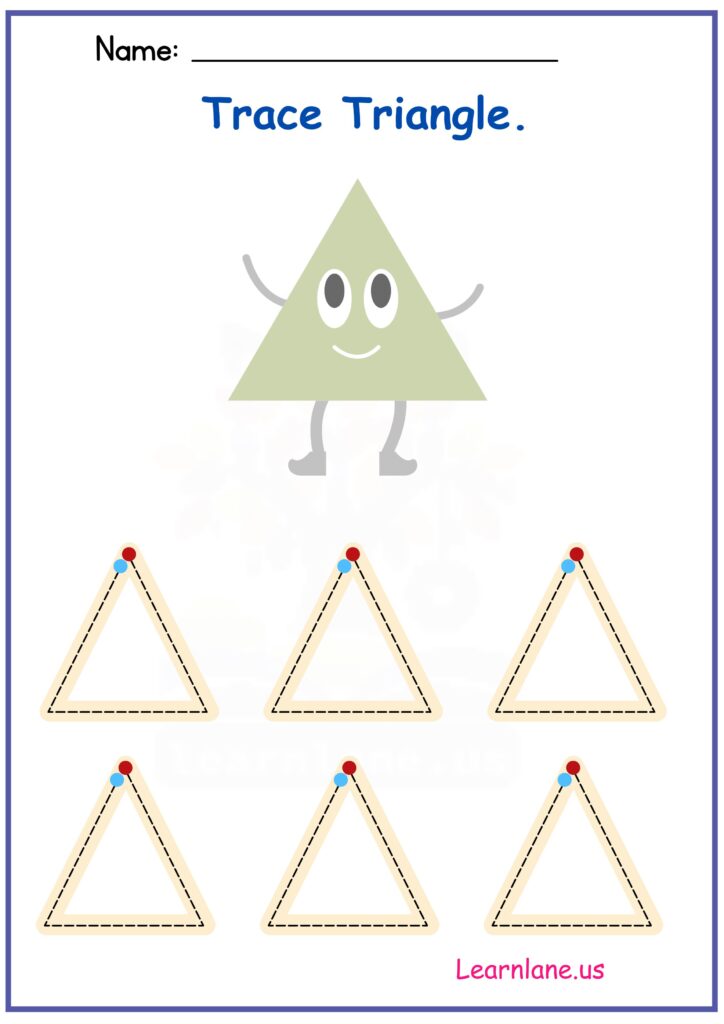
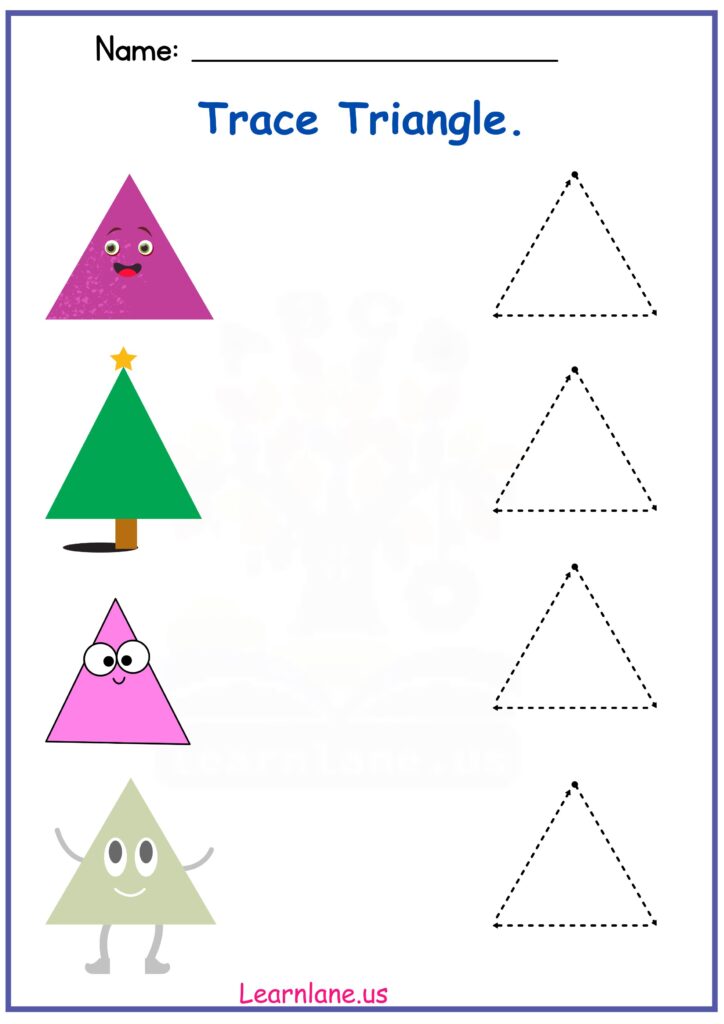
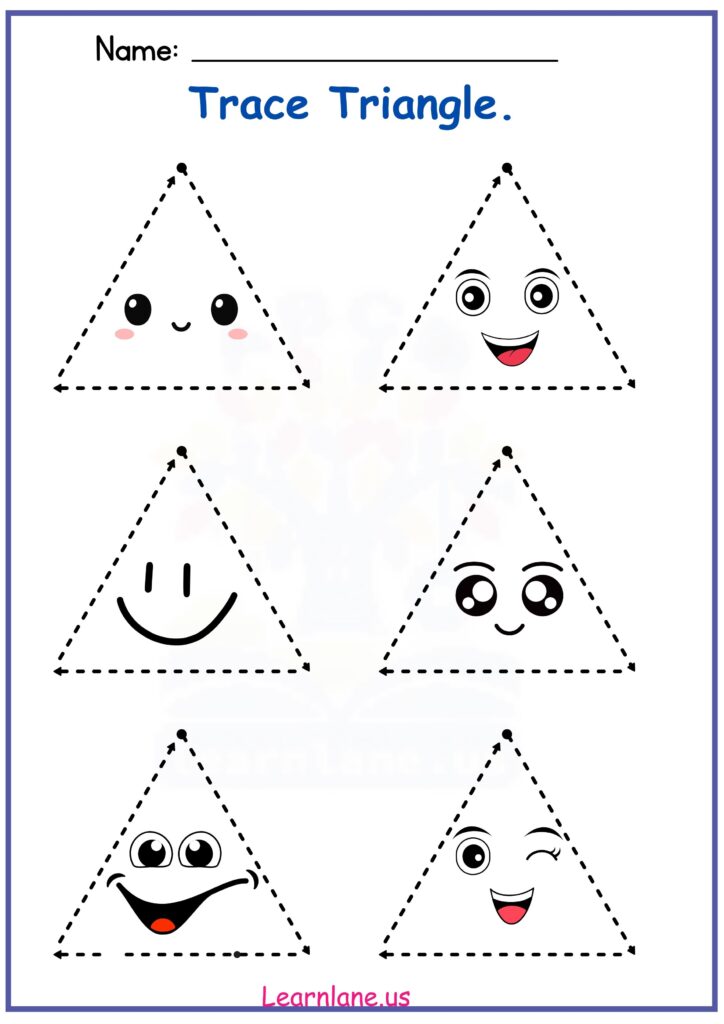
Why Do Preschoolers Need Triangle Tracing Practice?
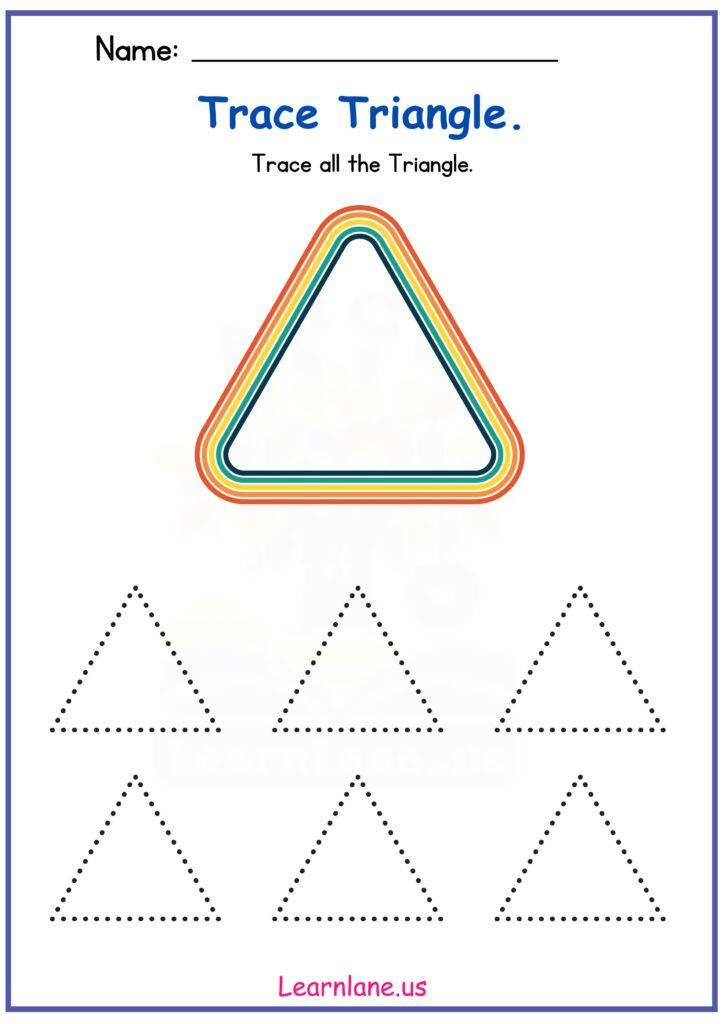
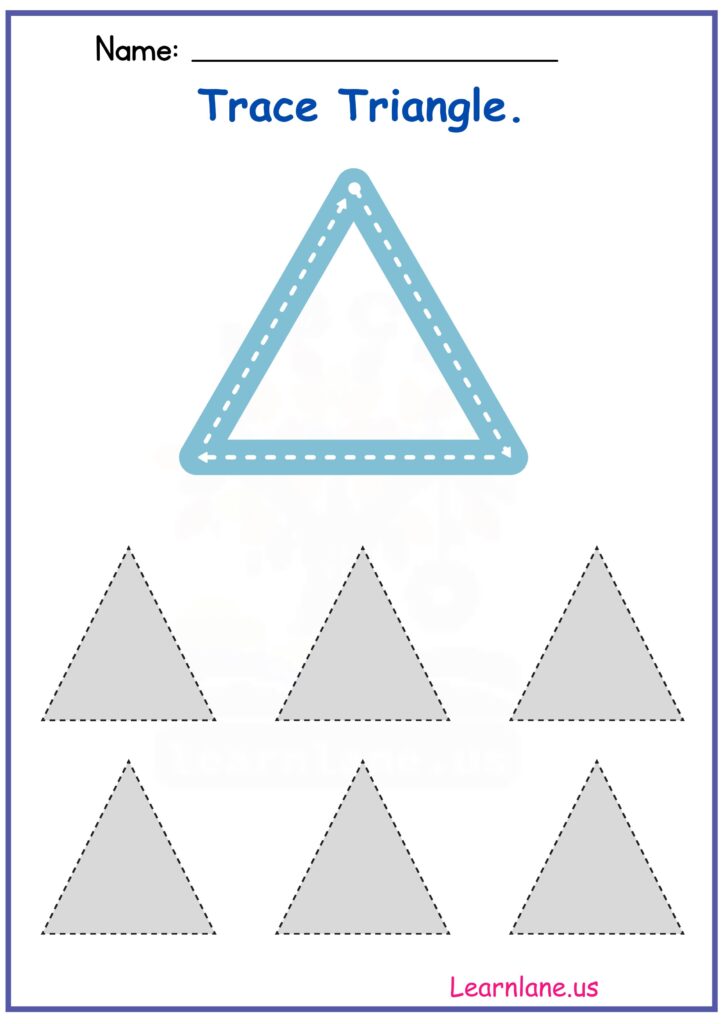
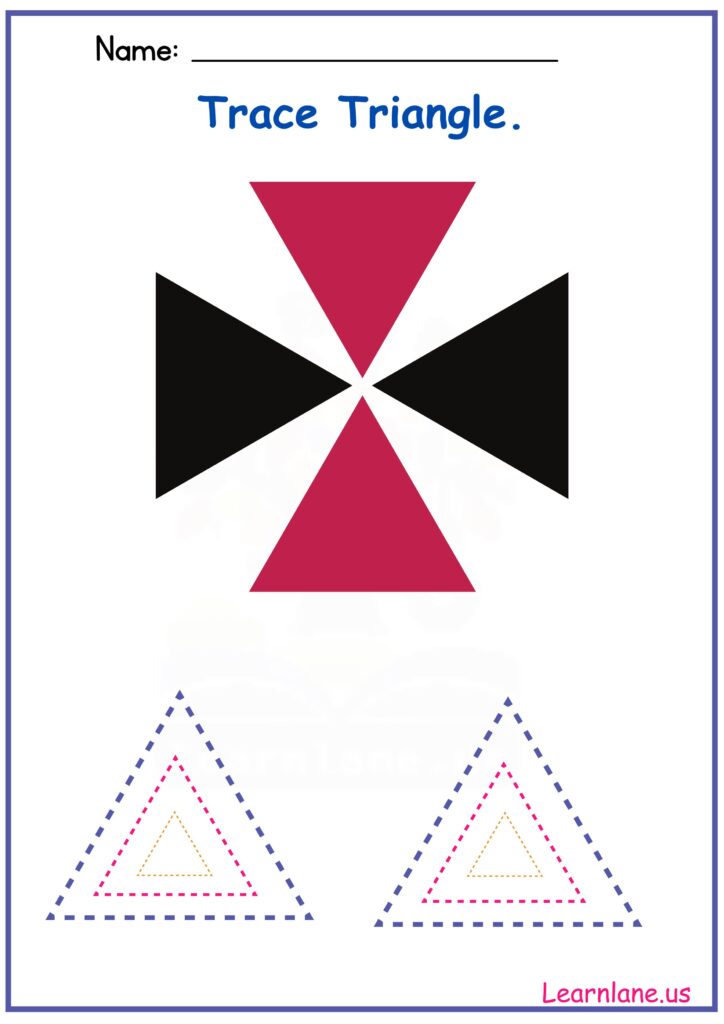
The triangle’s sharp angles and straight sides make it a perfect training shape for early writers. Unlike circles or curves, tracing triangles requires children to lift and reposition their pencil at each corner, which builds directional awareness and control. Learning to identify triangles also lays the groundwork for geometry concepts they’ll encounter later, such as sides, vertices, and symmetry.
How Can These Worksheets Support Early Learning Goals?
Teachers can integrate triangle tracing into shape recognition lessons or early geometry units, while parents can use them to strengthen hand–eye coordination during short daily activities. Large triangles help beginners master straight strokes, while smaller ones demand slower, more careful movement. After tracing, children can turn the shapes into objects , like kites, pizza slices, or mountains — encouraging both creative thinking and practical application.
What Creative Activities Work Well with Triangle Tracing?
Instead of simply tracing and coloring, you can expand the activity into themed projects. Arrange traced triangles to make patterns, design flags, or build picture scenes. Use colored paper triangles for matching games, or combine the worksheets with real-life shape hunts where children find triangles in their surroundings. These connections help children see the shape as part of the world around them, not just a drawing on paper.